What Is the Difference Between Land Clearing and Forestry Mulching in Mauldin?
Both methods leave a lot looking open, but only one leaves ground you can put a house on.
What is the difference between land clearing and forestry mulching?
Land clearing removes trees, stumps and roots from the ground so the soil can be graded and built on. Forestry mulching grinds trees and brush where they stand and leaves the chips and root systems in place. For a house pad, driveway or foundation, you need clearing. Mulching suits the parts of a lot you plan to leave natural.
What land clearing involves on a homesite
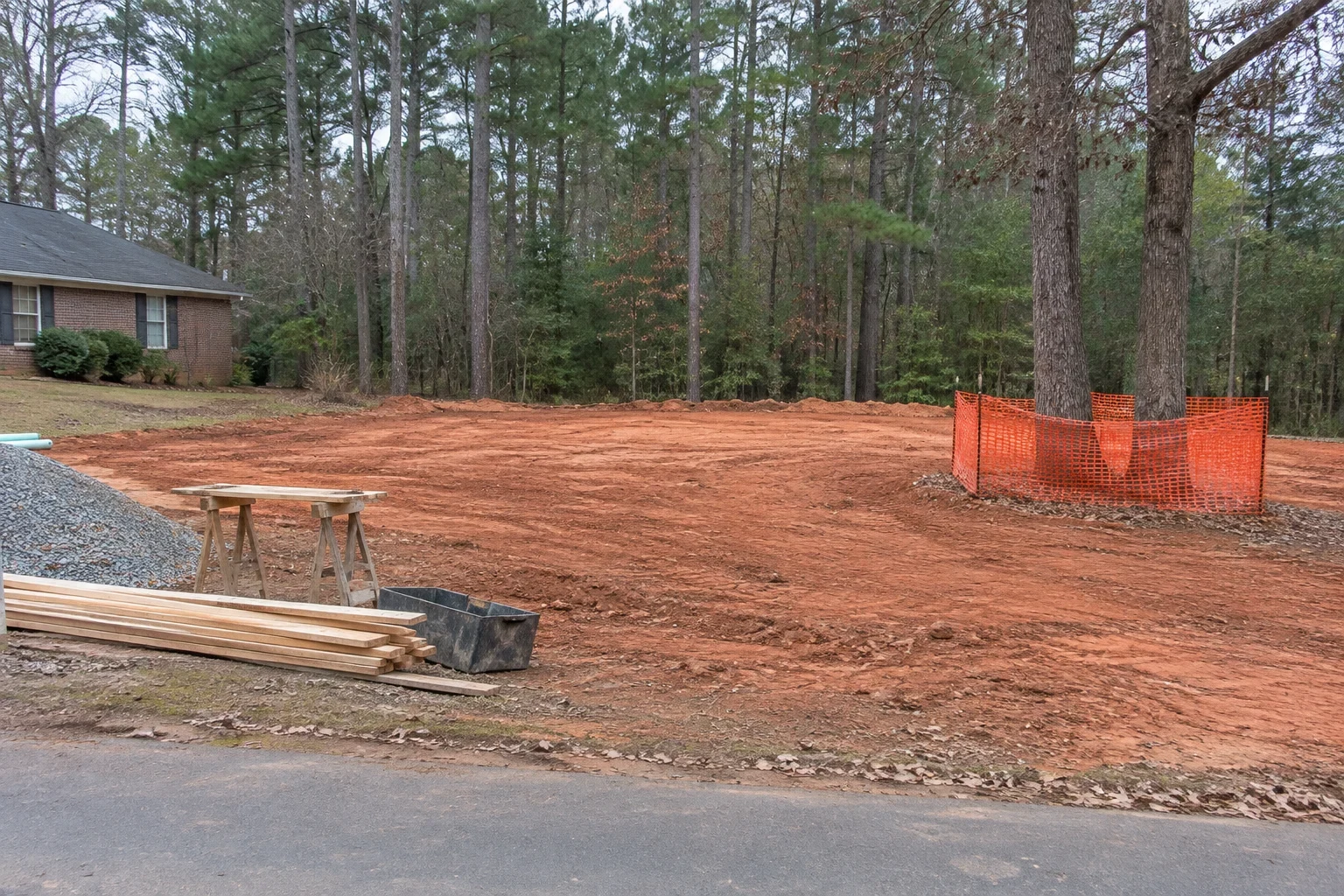
Land clearing takes the vegetation off the ground and out of the soil. Trees are felled, stumps are pulled, and the root mass is dug out along with the organic topsoil that sits on top of the clay. What remains is bare, stable ground that is ready for grading.
On a building lot we clear only the footprint that the plan calls for: the house, the driveway, the septic or utility runs, and a working margin around them. Everything outside that line is marked before any equipment moves, so the trees you chose to keep are still standing when the job is done.
The cleared wood has to go somewhere. Depending on the lot and what you want, logs can be hauled off, cut for firewood, or chipped. We settle that with you before the work starts so there is no surprise pile left at the edge of your property.
- Trees felled and removed from the build area
- Stumps and major roots pulled from the soil
- Organic topsoil stripped down to firm subsoil
- Debris hauled, chipped or stacked as agreed
What forestry mulching does and leaves behind
Forestry mulching uses a single machine with a rotating drum that grinds standing brush and small trees into chips. The chips fall where the plant stood and form a layer of mulch over the ground. Stumps are usually ground to about ground level, but the roots stay in the soil.
That makes mulching quick and tidy for underbrush, overgrown fence lines and wooded areas you want to open up for walking or a view. The mulch layer helps hold soil on a slope and slows erosion, which counts for a lot in Upstate clay after a heavy summer storm. It also disturbs the ground less, since one tracked machine does the work instead of several trucks and loaders.
Why the difference matters under a foundation
Wood and roots left in the ground rot. As they break down, the soil above them settles, and anything resting on that soil settles with it. Under a lawn that might mean a soft spot. Under a footing, a slab or a driveway, it can mean cracks, uneven floors and doors that start to stick.
That is why a mulched area cannot simply be graded and built on. Before foundation work begins, the chip layer and the buried root systems have to come out so the footings bear on firm, compacted soil. If a lot was mulched years ago and you are now ready to build, we treat the house area as a clearing job and plan for that extra removal.
The red clay common around Mauldin holds water and moves as it wets and dries. Starting with clean subsoil, then grading so water drains away from the house, gives the foundation the steady base it needs.
When mulching makes sense, and when a mix works best
Many lots benefit from both approaches. The building envelope gets full clearing, while the wooded edges, the back of the property or a path down to a creek can be thinned with mulching to open sightlines without stripping the ground bare.
Mulching is usually the better fit when you are not building on the area soon, when the slope is steep enough that bare soil would wash, or when you want to keep the larger trees and remove only what is crowding beneath them. Clearing is the right call for anything that will carry weight or be paved.
- House pad, garage and driveway: full clearing
- Septic field and utility trenches: full clearing
- Wooded borders and buffers: mulching or selective thinning
- Future lawn areas: depends on timing and how the ground will be finished
How we protect the trees and ground you are keeping
A tree can be killed by what happens near it, not just to it. Heavy equipment parked over the root zone compacts the soil and starves the roots, and the damage may not show for a season or two. We fence off the drip line of trees you want to keep and route machines around them.
We also walk the lot with you before work starts, agree on the clearing line, and tell you which day equipment arrives and how access will work. If neighbors share a driveway or a property line, we keep the entrance clear and the road swept, and silt fencing goes up where runoff could leave the site.
More questions about clearing a lot
Something not covered here? (864) 635-4785
Do I need a permit to clear land in the Mauldin area?
It depends on how much ground is disturbed and where the lot sits. Larger clearing and grading jobs in Greenville County can require a land disturbance permit and erosion controls, and we check the requirements for your site before work begins.
Will stumps grow back after mulching?
Some hardwoods, along with privet and sweetgum, often sprout again from roots left in the soil. Mulched areas may need follow-up mowing or treatment for a season or two.
Can the mulch from clearing be reused on my property?
Yes, chipped wood can be spread on paths, planting beds or slopes away from the house. It should never be left under the footprint of the foundation, driveway or patio.
How long after clearing can grading start?
Usually right away, as long as the ground is not saturated. Upstate clay is hard to work and compact when it is wet, so we may wait a few dry days after heavy rain.

Talk through your lot before anything is cut
A project consultation gives you time to walk through what you want to keep, where the house will sit and which parts of the lot need clearing, grading or a lighter touch. You will know the plan and the order of work before equipment arrives.