ServicesLand Clearing
Land Clearing in Mauldin
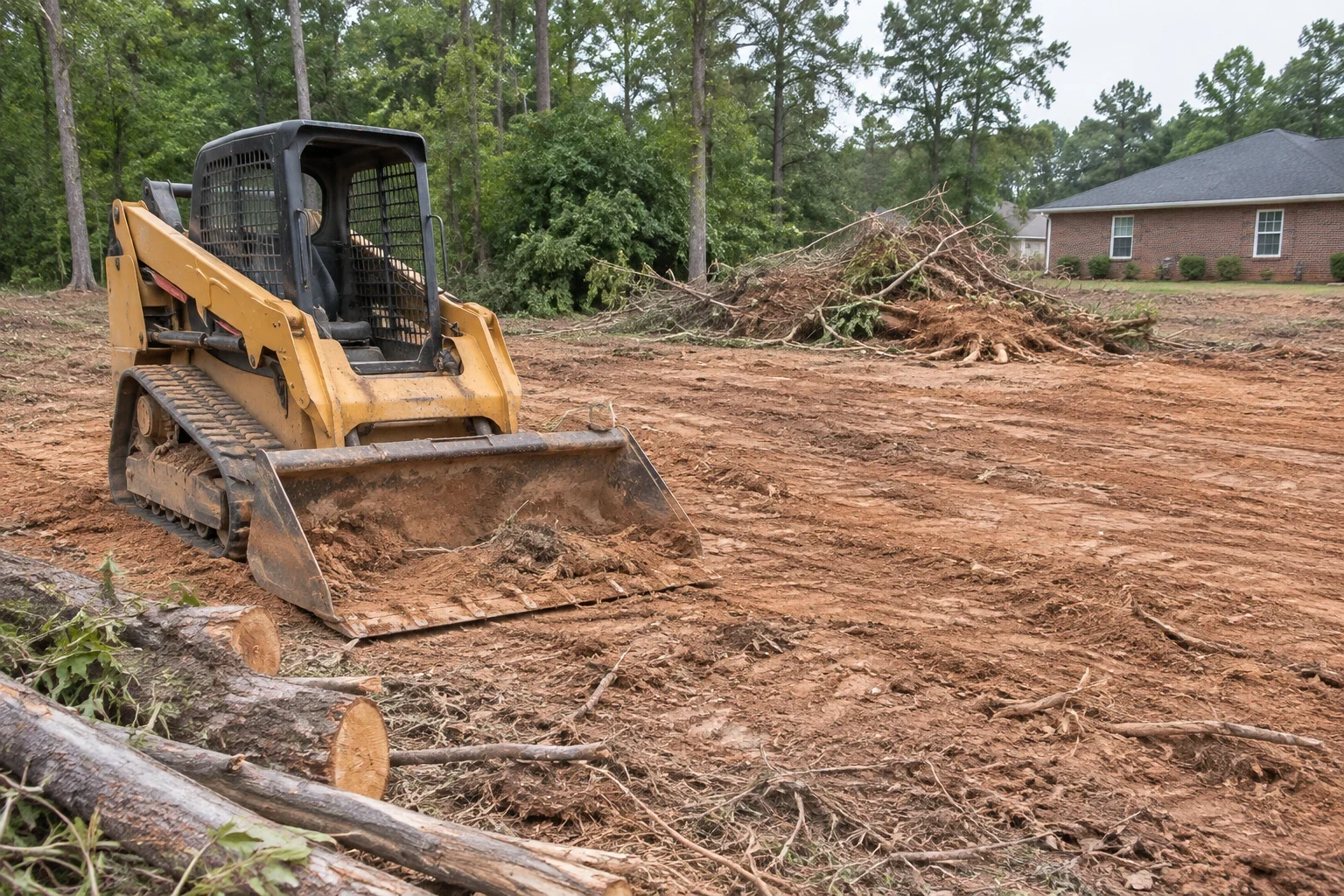
We clear lots for new homes, additions and outbuildings, taking out the trees, stumps and brush that stand in the way and leaving the rest of your land as you want it. Before a saw starts, you know what comes down, what stays and where the equipment will travel.
Clearing that starts with what you want to keep
Land clearing is the first physical step of most builds. It opens the footprint for the house, the drive and the septic or utility runs, and it gives grading crews clean ground to shape. Done carelessly, it also compacts roots, scars mature trees and leaves ruts that last for years.
We work the other way around. On the first walk we mark the trees worth saving, set the access route and agree on where debris and equipment will sit. Root zones get fencing at the drip line so machines stay off them, and any finished lawn, drive or garden beds near the work get mats or plywood where we have to cross.
The result is a lot that is ready for the next trade, with the shade trees and edges you chose still standing. We are licensed in South Carolina and North Carolina, and we carry the work straight into grading and foundation work when you want one builder from start to finish.
What our land clearing covers
Tree marking and selective removal
We flag every tree in or near the footprint and talk through each one with you. Trees that crowd the house or lean toward it come down in sections; healthy specimens outside the work zone stay.
Stump grinding and root removal
Stumps inside the footprint and drive are ground out and roots are raked so they do not rot under a slab or settle later. Stumps in yard areas can be ground below grade and left for topsoil and seed.
Brush and undergrowth
Privet, briars, vines and small saplings are cut and mulched or hauled. We can leave a natural buffer along property lines if you want screening from the road or neighbors.
Debris hauling and chipping
Logs, limbs and root balls leave the property or are chipped on site for path mulch, depending on what you prefer. We do not leave burn piles near houses or property lines.
Erosion control
Silt fence and other measures go in before the ground is opened. Bare red clay moves fast in a heavy spring rain, and keeping it on your lot protects ditches, drives and the neighbor's yard.
Utility locates and access planning
We request underground utility marking through 811 and plan a single equipment route that avoids septic fields, wells and buried lines.
When it is time to clear
- You own land and have a floor plan
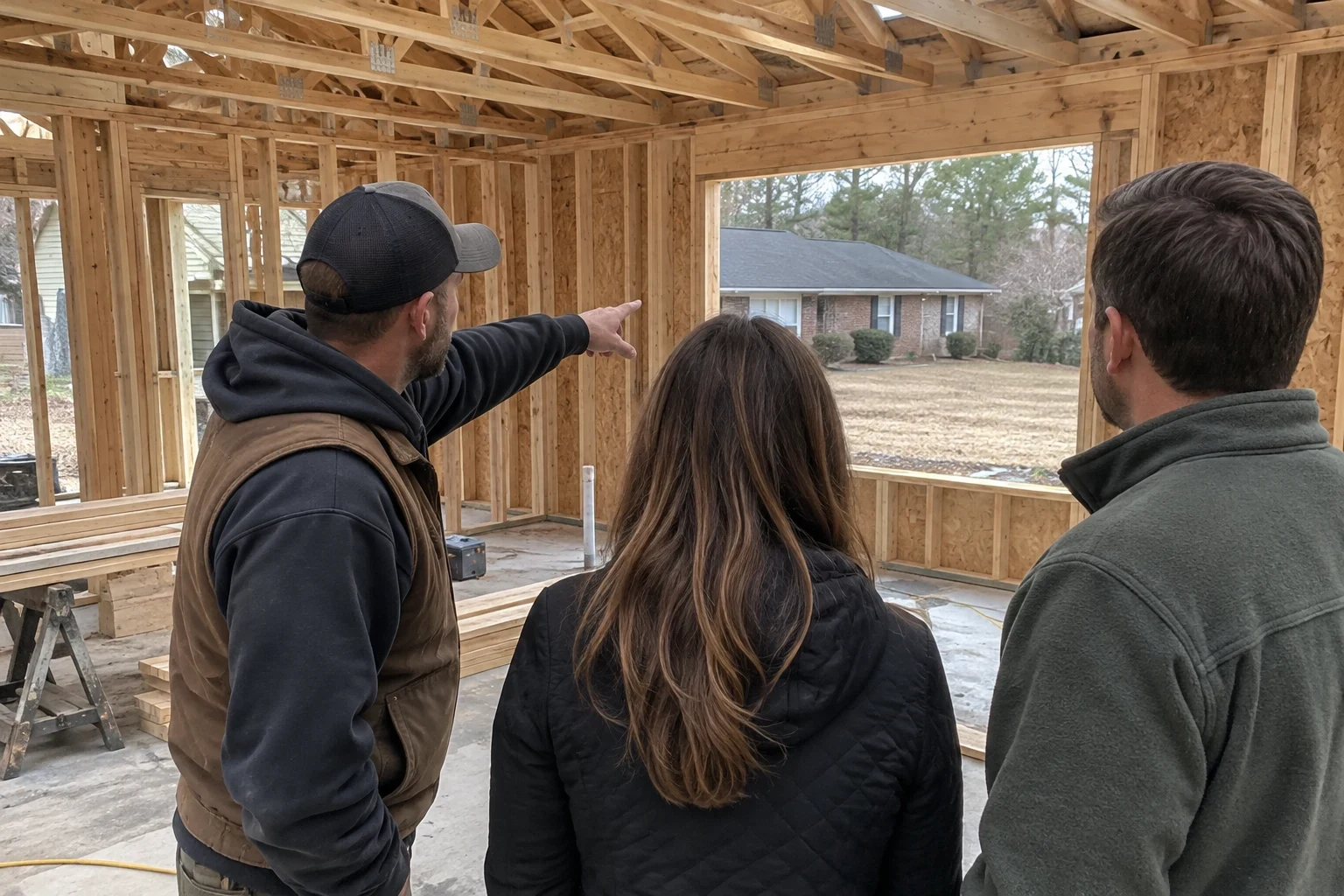
- Once a house design is set, the footprint can be staked and cleared. Waiting until then means we remove only what the plan requires.
- An addition or garage is planned
- Expanding an existing home often means taking out a few trees and a stretch of overgrowth close to the house. That is careful, small-machine work where protecting the yard matters most.
- Overgrowth is crowding the house
- Limbs over the roof, vines on siding and saplings near the foundation hold moisture against the house. Clearing a working margin keeps the structure dry and easier to maintain.
- Trees are dead, leaning or storm damaged
- A pine with a dead crown or a hardwood leaning toward a building is better removed on your schedule than after the next windstorm.
- You cannot see the lay of the land
- Thick brush hides slopes, low spots and old debris. A light clearing pass lets you and your designer see where the house really belongs.
How a clearing job runs
- 1
Site walk and marking
We walk the lot with you, stake the footprint and drive, and flag the trees to keep. You get a written scope that lists what comes out and how debris will be handled.
- 2
Protection goes in first
Before equipment arrives we set tree protection fencing, silt fence and ground mats over any lawn or pavement we must cross. Utility marks are confirmed on site.
- 3
Cutting, grinding and hauling
Trees come down in a planned order, stumps are ground and debris is chipped or loaded out as it goes. We tell you each evening what was finished and what is next.
- 4
Walk-through and handoff
We walk the cleared area with you, rake out tracks and confirm the lot is ready for grading. Our workmanship on the job is backed by a 1-year warranty.
What shapes the cost of land clearing
Every lot is priced after we walk it, because two parcels of the same size can be very different jobs. Your written estimate breaks out each part of the work so you can see where the money goes and adjust the scope if you want.
- Density and size of trees
- Mature hardwoods and large pines take more cutting, heavier equipment and more hauling than a lot of brush and saplings.
- Area and access
- The amount of ground to clear matters, and so does how we reach it. Narrow entries, steep banks or a route across a finished yard call for smaller machines and more protection.
- Stumps and debris handling
- Grinding every stump and hauling all material off costs more than chipping on site and leaving yard stumps below grade.
- Erosion control and permits
- Larger disturbed areas can require a land disturbance permit and a fuller erosion control setup. We tell you early if your project reaches that point.
- Trees kept close to the work
- Saving a tree near the footprint takes hand work and careful felling around it. Most owners find it worth it, and we price it openly.
Land clearing questions
- Will you clear the whole lot or just where the house goes?
- Only what you agree to. Most clients clear the footprint, a working margin around it, the drive and utility paths. Everything else stays wooded unless you ask otherwise.
- How do you keep saved trees from dying after construction?
- Most damage comes from soil compaction and cut roots, not the saw. We fence root zones at the drip line, keep equipment and material piles outside them and avoid trenching through them where the plan allows.
- Will my lawn and driveway be torn up?
- We plan one access route and cover any finished surface along it with mats or plywood. Tracks inside the work area are raked out at the end, and anything we damage outside it is ours to put right.
- What happens to the wood?
- You choose. We can haul everything off, chip limbs on site for mulch or cut logs to firewood length and stack them where you want.
- Do you also do the grading and foundation?
- Yes. Many clients have us carry straight on with grading and foundation work, and for new houses the full custom home building project. One crew keeping the site in order saves handoffs and repeat equipment trips.
Start with a walk of your land
Tell us about your lot and what you plan to build. We will set up a time to walk it with you, mark what stays and explain the clearing scope before any work begins.