ServicesGrading
Grading in Mauldin, SC
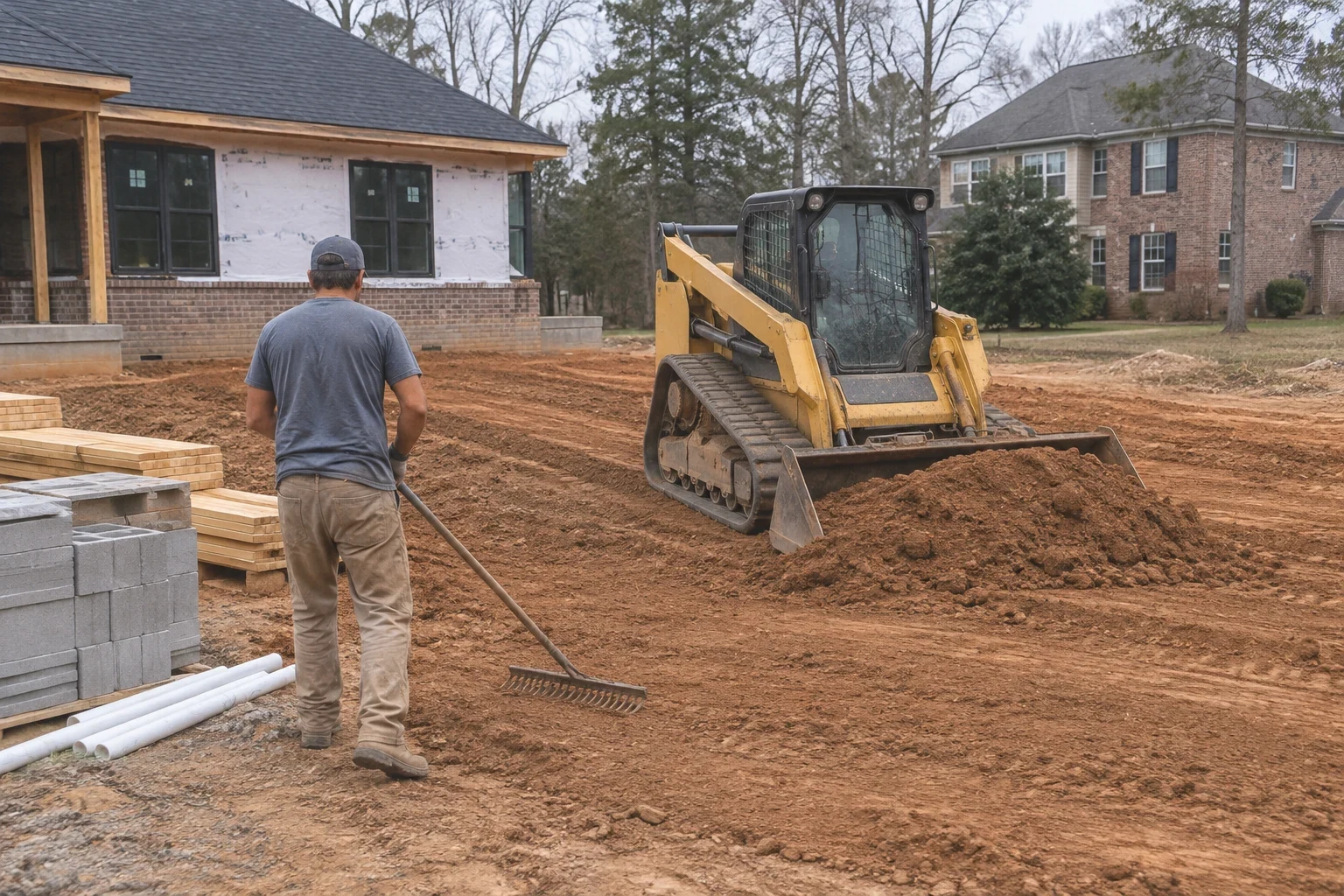
We shape the ground so water runs away from your foundation, a new slab sits on firm, compacted soil, and your yard drains the way it should. On finished properties we protect the lawn, beds and driveway we are not working on, and we tell you what each day involves before it starts.
What grading does for a house
Grading is the work of setting the shape and slope of the ground. On a new build it comes after land clearing and before foundation work, turning an uneven lot into a level, compacted pad with a driveway path and drainage already planned. On an existing home it usually means correcting slopes that send rain toward the house instead of away from it.
The soil here is mostly red clay. It holds water, swells when wet and shrinks in a dry August, so a few inches of slope in the wrong direction can keep a crawl space damp for years. Getting the grade right is quiet, unglamorous work, and it protects everything built on top of it.
We are licensed in South Carolina and North Carolina, and we treat a finished yard the way we would treat the inside of your home. Equipment stays on the paths we agree on, and you hear from us before anything changes.
What our grading work includes
- Rough grading for new home sites
- High spots are cut down, low ones are filled, and the building pad is shaped to the elevations on your plans. This is the stage where the pad, the driveway route and the future yard each get their slope.
- Compaction in measured lifts
- We place fill in thin layers and compact each one before adding the next. Fill left loose keeps settling, and that settling under a slab or porch tends to appear later as cracks.
- Ground that drops away from your walls
- We shape the soil so it falls off from the house, aiming for at least six inches of drop over the first ten feet wherever the lot allows. Swales then guide that runoff toward the street or another safe outlet.
- Finish grading
- Once construction or drainage work wraps up, we smooth and dress the surface for seed, sod or planting beds. No ridges or low pockets are left behind to collect water.
- Protection for what stays
- Before any machine arrives, we mark off the trees, beds, walks and driveways outside the work area. Anywhere equipment must cross turf, ground mats go down first so the lawn does not end up rutted.
Signs your property needs grading
Water standing near the house
Puddles that sit against the foundation for a day after rain mean the ground is sloped toward the house, or flat enough that water has nowhere to go.
A damp or musty crawl space
Moisture under the house often starts outside. Correcting the grade is usually the first and least invasive fix to try.
Soil washing out
Mulch carried across the walk, gullies along a bed edge or bare clay showing after a storm all point to water running too fast in the wrong place.
Patios or walks tilting toward the house
When the ground beneath settles, hard surfaces can start draining back toward the wall.
A freshly cleared lot
Once the trees and stumps are out, the lot needs shaping before foundation work can begin.
What shapes the cost of grading
Every lot is different, so we price grading after seeing the ground. Your estimate is written out line by line, and we explain each part of it during the consultation.
How much soil moves
A lot that only needs reshaping costs less than one that needs fill brought in or excess soil hauled away.
Access to the work area
Open lots take full-size equipment. A narrow side yard or fenced backyard may need smaller machines and more hand work.
Soil and rock conditions
Wet clay, buried debris or rock near the surface all slow the work and can change how fill is placed.
Drainage additions
Swales, extended downspout lines or a drain outlet add materials and labor beyond the grading itself.
Restoring the surface
Seed and straw, sod or erosion matting each carry a different cost, and we list the option you choose separately.
How a grading job runs
- 1
Walk the property together
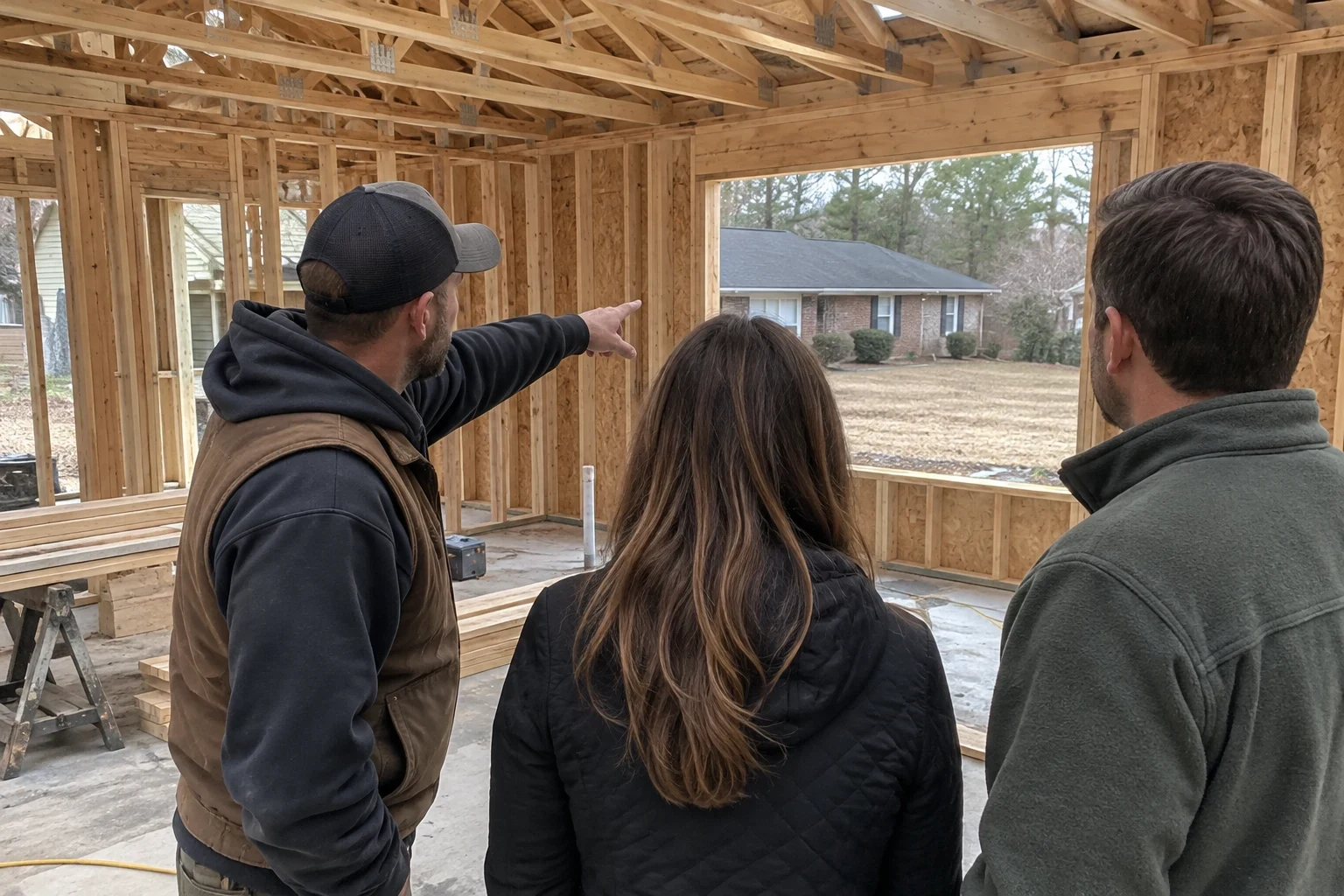
We look at where water collects, where it should go and what needs protecting. You tell us how you use the yard and where the family parks, so the plan works around your days.
- 2
Set a written plan
You get a plan showing target slopes, where soil comes from or goes, how equipment enters and what will be restored afterward.
- 3
Mark utilities and protect the site
We have underground lines located before digging, stake off trees and beds, and lay mats on any turf the machines must cross.
- 4
Cut, fill and compact
We move soil in stages and check grades with a laser level as we go. If rain makes the clay too wet to compact properly, we pause and let you know when work resumes.
- 5
Finish, clean up and review
We dress the surface, sweep drives and walks, and walk the finished grade with you. After the next good rain, we are glad to come look at how it drained.
Grading questions we hear often
How long does grading take?
A yard drainage correction is often a day or two. Preparing a full building pad takes longer, depending on the lot and the soil. Wet weather can add days, since clay cannot be compacted properly when it is saturated.
Will the equipment tear up my lawn?
We keep machines on agreed routes and put down ground mats where they cross turf. Areas inside the work zone will be bare until restored, and we tell you exactly where those are before we start.
Do I need a permit for grading?
Small yard corrections usually do not. Larger disturbed areas, especially on new home sites, can require a land disturbance permit with erosion control measures. We check what applies to your property and handle the paperwork when it is needed.
Should grading happen before or after building?
Both. Rough grading prepares the pad before foundation work, and finish grading happens once construction is done so the final slopes match the house as built. If we are handling your custom home building, both stages are part of that schedule.
Is the work covered after you finish?
Yes. Our grading carries a 1-year warranty on workmanship. If a slope we set is not draining as planned, call us and we will come back to look at it.
Start with a look at your lot
A project consultation lets us walk the ground with you, see where water goes and explain what grading would involve. You will know the plan and the next steps before any machine arrives.